
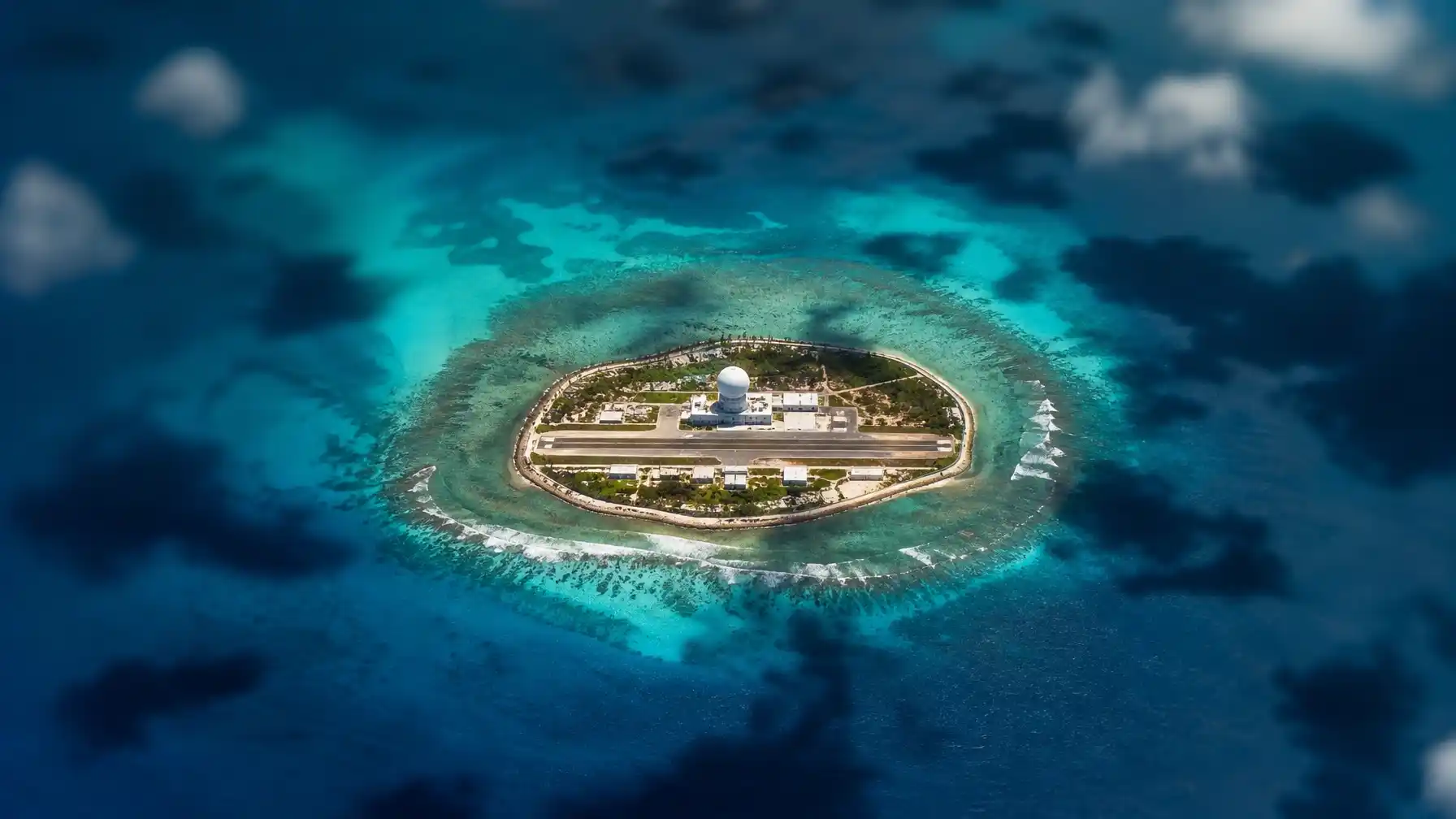
The Agalega Islands in Mauritius have emerged as a critical logistics and maritime surveillance base, extending India's strategic reach across the Western Indian Ocean.
One Liners
| Fact / Entity | Detail |
|---|---|
| What | Agalega Islands emerge as critical logistics and maritime surveillance base |
| When | May 2026 |
| Where | Agalega Islands, Mauritius (Western Indian Ocean) |
| Strategic Significance | Extends India's strategic reach across the Western Indian Ocean |
| Policy Anchor | SAGAR Doctrine (Security and Growth for All in the Region) |
| Geographic Context | Twin islands north of Mauritius, east of Madagascar, near Mozambique Channel |
Why in News?
The Agalega Islands' emergence as a logistics and maritime surveillance base in May 2026 extends India's strategic footprint across the Western Indian Ocean. This development aligns with India's SAGAR doctrine and Indo-Pacific strategy, providing critical monitoring capabilities in a region of heightened great-power competition.
Keyword/Terminology Hub
- Agalega Islands: Twin-island dependency of Mauritius in the Western Indian Ocean, strategically located north of Mauritius and east of Madagascar near the Mozambique Channel.
- SAGAR Doctrine: India's "Security and Growth for All in the Region" maritime strategy emphasising cooperative capacity-building and shared maritime security in the Indian Ocean Region.
- Maritime Domain Awareness (MDA): The comprehensive understanding of maritime activities, threats, and vulnerabilities through surveillance, intelligence, and logistics networks.
- Western Indian Ocean: Maritime zone encompassing the Mozambique Channel, Seychelles, Mauritius, and Madagascar, critical for global shipping lanes and energy transit routes.
Background & Static Concept Link
- Definition: The Agalega Islands are a dependency of the Republic of Mauritius comprising North Agalega and South Agalega, located approximately 1,100 km north of the Mauritian mainland in the Western Indian Ocean. They have emerged as a strategic logistics and surveillance node for India.
- Historical Origin: India and Mauritius share deep historical ties rooted in colonial-era Indian diaspora migration. Defence and maritime cooperation have progressively expanded through Joint Commission meetings and development partnership frameworks since the 2000s.
- Constitutional/Legal Framework: India-Mauritius relations operate through bilateral agreements, Joint Statements, and development partnership frameworks rather than formal treaty obligations. The SAGAR doctrine provides the strategic policy anchor for maritime cooperation.
- Institutional Framework:
- Ministry of External Affairs (Indian Ocean Region Division): Coordinates bilateral diplomatic and strategic dialogue.
- Indian Navy: Provides maritime surveillance, patrol, and logistics support.
- Mauritius Coast Guard: Counterpart for joint maritime security and surveillance.
- India-Mauritius Joint Commission: Institutional mechanism for advancing bilateral cooperation.
- Chronology/Timeline:
| Year | Event |
|---|---|
| 1970s–1980s | India-Mauritius defence cooperation begins with training and equipment assistance |
| 2005 | Comprehensive Economic Cooperation and Partnership Agreement (CECPA) negotiations commence |
| 2015 | PM Modi visits Mauritius; SAGAR doctrine articulated; maritime cooperation framework expanded |
| 2020s | Indian-assisted infrastructure development advances on Agalega for maritime and surveillance purposes |
| May 2026 | Agalega Islands formally acknowledged as critical logistics and maritime surveillance base extending India's Western Indian Ocean reach |
- Related Static Topics / Cross References:
- Similar concepts: Assumption Island (Seychelles), Diego Garcia (US/UK), Duqm Port (Oman)
- Linked schemes: SAGAR Doctrine, Indo-Pacific Oceans Initiative (IPOI), Project Mausam
- Associated reports: Maritime India Vision 2030; India-Mauritius Joint Commission communiqués
- Comparative examples: China's military base in Djibouti; French naval presence in Réunion
Key Provisions / Main Developments
| Strategic Function | Operational Detail |
|---|---|
| Maritime Surveillance Base | Provides forward logistics and monitoring capabilities for Indian maritime agencies in the Western Indian Ocean |
| Logistics Hub | Enables sustainment and operational turnaround for naval and aerial patrol assets operating far from mainland Indian ports |
| Domain Awareness Extension | Expands real-time monitoring of maritime traffic, illegal fishing, and non-state threats across a vast oceanic expanse |
| Strategic Reach | Positions India as a net security provider in a maritime zone historically dominated by Western naval powers |
Mains Perspective (SPECTEL Analysis)
- Political/Legal impact: Establishes India's presence in the Western Indian Ocean without formal basing agreements, using development partnership frameworks. It counters China's expanding maritime footprint in the Indian Ocean through dual-use infrastructure cooperation that respects Mauritian sovereignty.
- Economic impact: Protects sea lines of communication critical for India's energy imports and trade with Africa. The Mozambique Channel is a vital chokepoint for global shipping, and enhanced surveillance reduces risks to commercial traffic and fishing interests.
- Constitutional/Cultural impact: Reinforces India's historical diaspora linkages with Mauritius and the civilisational principle of SAGAR — cooperative security and shared prosperity rather than coercive dominance. It demonstrates India's commitment to being a "net security provider" for smaller Indian Ocean states.
- Technological impact: Maritime surveillance infrastructure enhances India's real-time domain awareness in a region with limited indigenous monitoring capacity, supporting the Indo-Pacific Oceans Initiative's information-sharing and situational awareness pillars.
- Logical/Ethical conclusion: The Agalega development exemplifies India's "gentle power" approach — using developmental assistance to achieve strategic objectives while respecting host nation sovereignty. However, it must be balanced against Mauritius's own sovereignty sensitivities and the risk of local backlash against any perception of militarisation.
Fact-Check & Committees
- Relevant Data/Stats: The Indian Ocean carries approximately 80% of global seaborne oil trade. Mauritius has a population of approximately 1.3 million, with nearly 70% of Indian origin. The Mozambique Channel is one of the world's busiest maritime passages, linking the Cape of Good Hope route to the broader Indian Ocean.
- Committee/Judgment: SAGAR Doctrine (2015): Articulated by Prime Minister Modi during his Mauritius visit, envisioning India as a net security provider in the Indian Ocean. Indo-Pacific Oceans Initiative (IPOI), 2019: Identifies maritime security and domain awareness as core pillars where Mauritius and the Western Indian Ocean are natural partners. India-Mauritius Joint Commission: Has progressively advanced defence and maritime cooperation through institutional dialogue.
- Quote: "The Indian Ocean is at the heart of India's maritime strategy." — Prime Minister Narendra Modi, 2015
Exam Lens
- UPSC/State PCS Mains angle: "Examine the strategic significance of the Agalega Islands in India's Indian Ocean maritime strategy. How does this development align with the SAGAR doctrine and India's Indo-Pacific vision?"
- Essay angle: "Islands as anchors: The geopolitics of maritime logistics in the Indian Ocean."