
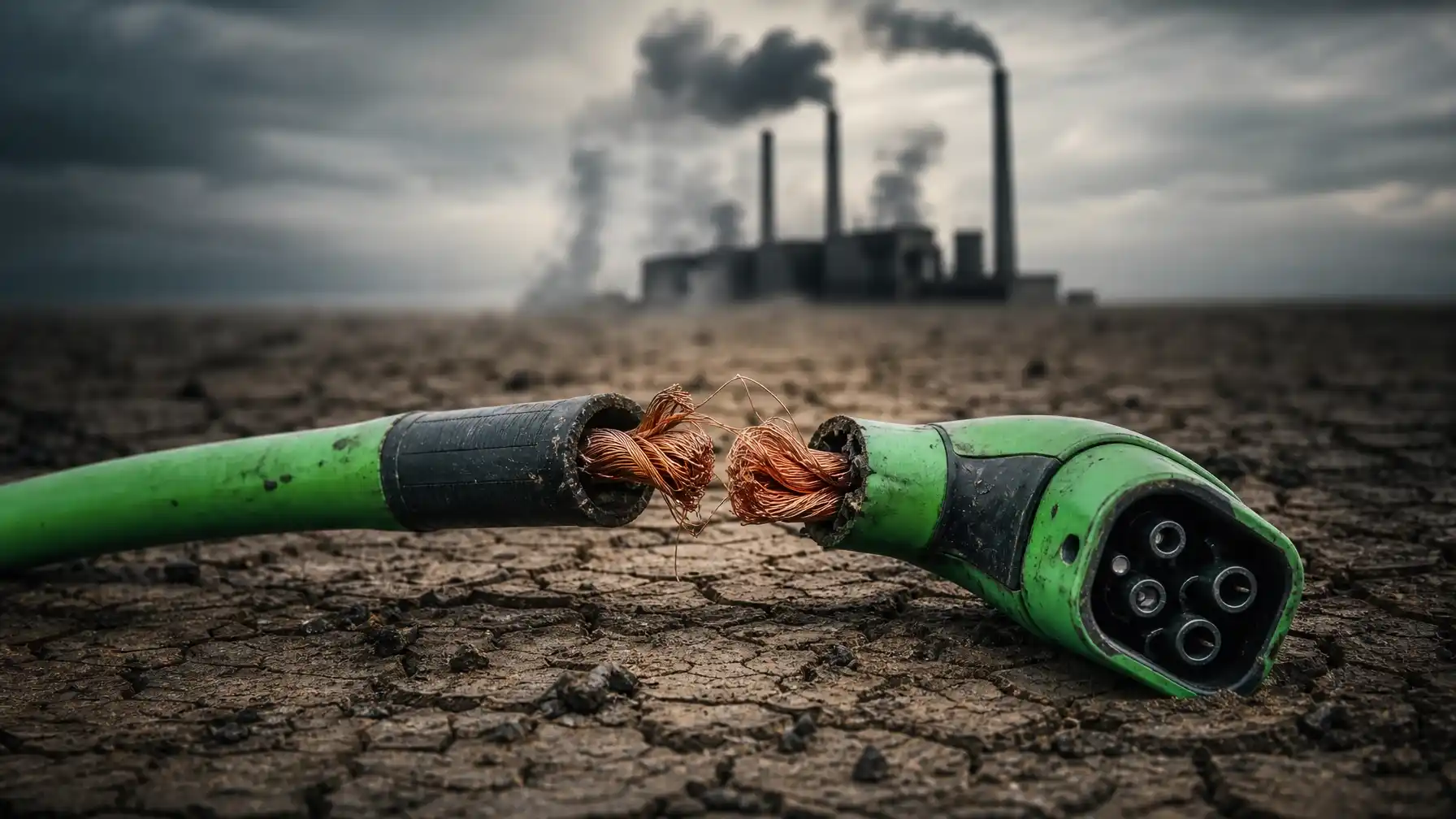
Concerns have emerged over the dilution of Corporate Average Fuel Efficiency norms in the 2026 draft, with EV share targets lowered from 14% to 8-9% by 2032 and "super credits" introduced for transitional technologies like Flex-Fuel Vehicles, potentially undermining India's long-term decarbonisation goals.
One Liners
| Fact / Entity | Detail |
|---|---|
| What | Draft CAFE norms dilution concerns raised |
| When | May 2026 (draft norms) |
| Who | Bureau of Energy Efficiency (BEE); Ministry of Power; automotive industry stakeholders |
| Legislation | Energy Conservation Act, 2001 (as amended in 2022) |
| Key Change | EV share target lowered from 14% to 8-9% by 2032 |
| New Mechanism | "Super credits" for Flex-Fuel Vehicles (FFVs) and transitional technologies |
| Significance | Risks to India's long-term green transition and net-zero 2070 trajectory |
| Related Programme | FAME India (Faster Adoption and Manufacturing of Electric Vehicles) |
Why in News?
The 2026 draft CAFE norms have sparked controversy by lowering mandated EV share targets from 14% to 8-9% by 2032 and introducing "super credits" for Flex-Fuel Vehicles. As per the concerns raised, this regulatory dilution risks locking India into liquid fuel dependency and undermining the transport decarbonisation pathway essential for its net-zero 2070 pledge.
Keyword/Terminology Hub
- CAFE Norms: Corporate Average Fuel Efficiency regulations mandating average CO₂ emissions or fuel economy across an automaker's entire fleet sold in a market.
- Super Credits: Regulatory mechanism allowing manufacturers to count low-emission vehicles multiple times toward compliance, effectively reducing the actual volume of clean vehicles required.
- Flex-Fuel Vehicles (FFVs): Vehicles capable of running on blended fuels such as petrol-ethanol mixes up to E85, positioned as transitional technology between internal combustion engines and full electrification.
- Energy Conservation Act, 2001 (Amended 2022): Legislation empowering the Bureau of Energy Efficiency to set energy consumption standards, including non-fossil fuel vehicle obligations.
Background & Static Concept Link
- Definition: Corporate Average Fuel Efficiency (CAFE) norms regulate the average fuel consumption or CO₂ emissions of an automobile manufacturer's fleet. India's CAFE norms were introduced to reduce oil import dependency, cut vehicular emissions, and align with climate commitments.
- Historical Origin: India's CAFE norms were first notified in 2017 under the Energy Conservation Act, 2001, with Phase I (2017–2022) and Phase II (2022–2027). The 2022 amendment to the Energy Conservation Act expanded BEE's mandate to include non-fossil fuel vehicle obligations. The draft 2026 norms propose Phase III.
- Constitutional/Legal Framework:
- Energy Conservation Act, 2001 (as amended in 2022): Empowers the Bureau of Energy Efficiency (BEE) to prescribe energy consumption standards for equipment and appliances, including vehicles, and to mandate non-fossil fuel vehicle sales.
- Motor Vehicles Act, 1988: Governs vehicle standards, registration, and road safety.
- Environment (Protection) Act, 1986: Provides overarching environmental regulatory authority.
- India's NDC (2022): Commitment to reduce emission intensity of GDP by 45% by 2030 from 2005 levels and achieve net-zero by 2070.
- Institutional Framework:
- Bureau of Energy Efficiency (BEE): Statutory body under Ministry of Power responsible for energy efficiency programmes and standards.
- Ministry of Road Transport and Highways (MoRTH): Formulates national road transport policy.
- Ministry of Heavy Industries: Administers automotive industry schemes including FAME.
- Automotive Research Association of India (ARAI): Testing and certification body for vehicle emissions and fuel efficiency.
- Chronology/Timeline:
| Year | Event |
|---|---|
| 2001 | Energy Conservation Act enacted |
| 2017 | India notifies Phase I CAFE norms (effective 2017–2022) |
| 2022 | Phase II CAFE norms (2022–2027) notified; Energy Conservation Act amended to include non-fossil fuel vehicle obligations |
| 2023–2025 | FAME II scheme incentivises EV adoption; industry lobbies for relaxed targets |
| May 2026 | Draft CAFE norms propose EV share reduction to 8-9% by 2032 and super credits for FFVs |
- Related Static Topics / Cross References:
- Similar concepts: BS-VI emission norms; FAME subsidy scheme; PLI for Auto and Auto Components
- Linked schemes: National Electric Mobility Mission Plan (NEMMP) 2020; Ethanol Blending Programme (E20 by 2025); National Green Hydrogen Mission
- Associated reports: IPCC AR6 Synthesis Report on transport decarbonisation; NITI Aayog reports on EV adoption
- Comparative examples: EU CAFE standards (95 g/km CO₂ target); US EPA fuel economy standards; China's New Energy Vehicle mandate
Key Provisions / Main Developments
| Draft Norm Feature | Detail | Concern |
|---|---|---|
| CAFE Target Revision | EV share mandate lowered from 14% to 8-9% by 2032 | Slower fleet electrification; higher cumulative emissions |
| Super Credits | FFVs and transitional tech counted multiple times toward compliance | Masked ICE continuation; reduced real clean vehicle deployment |
| Flex-Fuel Push | Ethanol-capable vehicles incentivised as bridge technology | Risk of locking in liquid fuel infrastructure versus full electrification |
| Timeline | 2026 draft norms for post-2027 implementation | Industry gets extended compliance runway at potential climate cost |
Mains Perspective (SPECTEL Analysis)
- Economic impact: Lower EV mandates reduce the manufacturing scale required for domestic battery and component ecosystems, potentially ceding first-mover advantage to competing EV manufacturing hubs like China and Vietnam. Conversely, FFV super credits protect existing ICE supply chains and oil marketing companies.
- Environmental impact: As per the IPCC AR6 Synthesis Report, transport decarbonisation must accelerate globally to limit warming to 1.5°C. Diluting India's vehicle electrification targets by nearly half increases cumulative transport emissions, jeopardising net-zero 2070 and NDC commitments. The transport sector contributes approximately 10–12% of India's energy-related CO₂ emissions.
- Technological impact: Super credits for transitional technologies risk technological lock-in. Flex-fuel vehicles, while marginally cleaner than pure petrol, still emit CO₂ and local pollutants. They may delay the infrastructure investment and consumer habituation necessary for full battery electric vehicle transition.
- Governance issues: The draft reflects intense automotive industry lobbying and the political economy of fossil fuel dependence. It raises questions about regulatory capture — whether the BEE and MoRTH are prioritising industry comfort over climate science and energy security imperatives.
- Logical/Ethical conclusion: Transitional technologies have a role in decarbonisation, but super credits that inflate their compliance value distort market signals. India's draft CAFE norms represent a strategic retreat from aggressive electrification at precisely the moment when global competitors are accelerating. The 8-9% EV target by 2032 is insufficient for a credible net-zero pathway.
Fact-Check & Committees
- Relevant Data/Stats: As per the FAME India scheme dashboard, EV sales have grown rapidly but remain a small fraction of total vehicle sales. India's ethanol blending programme targets 20% blending (E20) by 2025. The transport sector contributes approximately 10–12% of India's energy-related CO₂ emissions. The Energy Conservation Act, 2022 amendment explicitly empowered the government to mandate non-fossil fuel vehicle sales.
- Committee/Judgment: Energy Conservation Act Amendment, 2022: Expanded BEE's mandate to specify non-fossil fuel consumption norms. FAME II Scheme: Provided demand incentives for EVs with an outlay of ₹10,000 crore. IPCC AR6 Synthesis Report: Identified transport electrification as essential for 1.5°C pathways.
- Quote: "We cannot solve our problems with the same thinking we used when we created them." — Albert Einstein
Exam Lens
- UPSC/State PCS Mains angle: "The proposed dilution of CAFE norms and EV targets in the 2026 draft has sparked debate over India's transport decarbonisation trajectory. Critically examine the tension between industry readiness and climate imperatives, and assess whether transitional technologies like Flex-Fuel Vehicles can substitute for accelerated electrification."
- Essay angle: "The road to net-zero: Can India afford to slow down its electric vehicle transition?"