
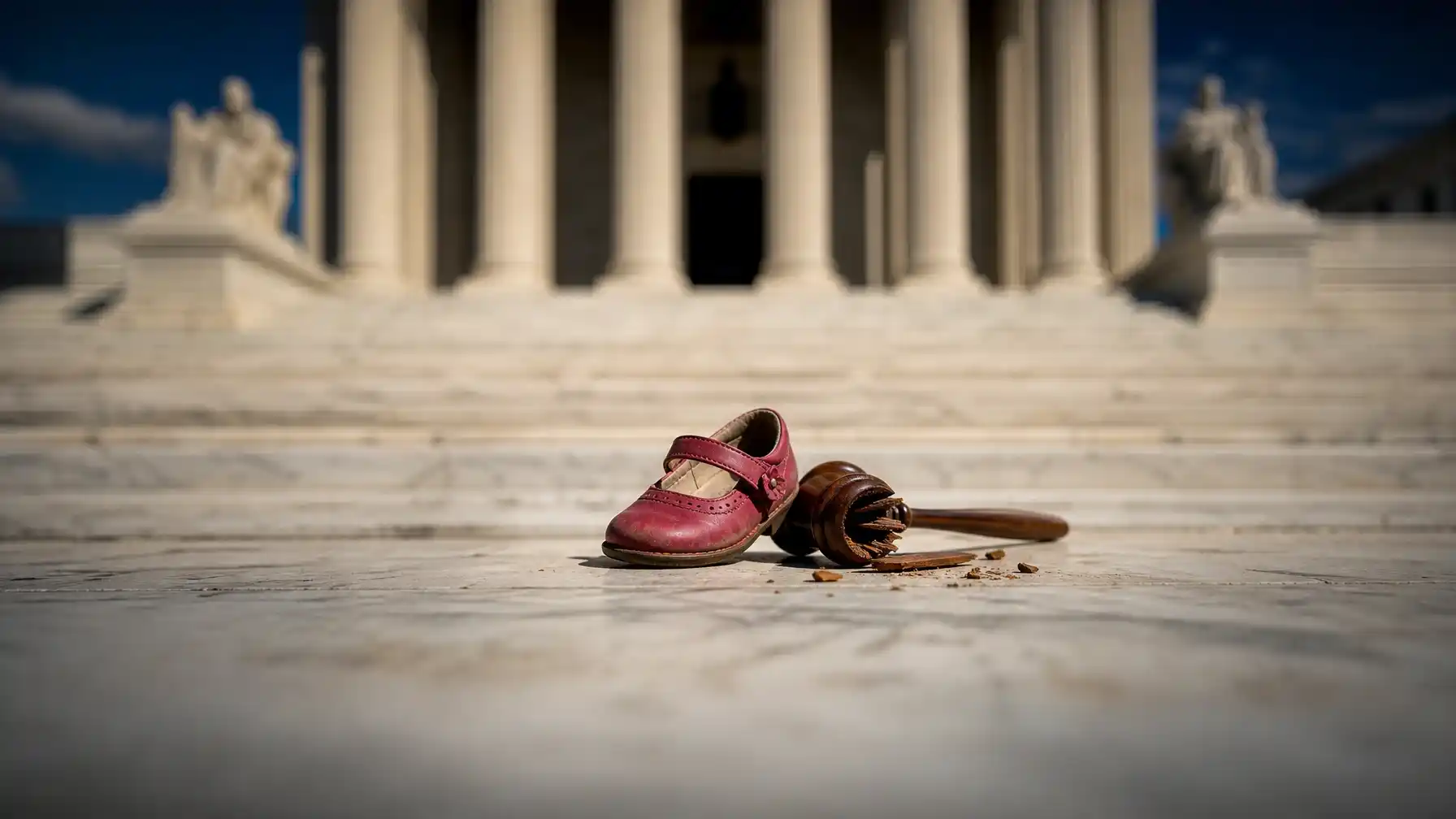
A report reveals that a major Indian city records the highest rate of crimes against minors while simultaneously exhibiting the lowest chargesheeting rate, exposing a critical disconnect between crime reporting and judicial follow-through in the child protection framework.
One Liners
| Fact / Entity | Detail |
|---|---|
| What | Report on crimes against minors reveals high incidence but low chargesheeting |
| When | May 2026 |
| Key Finding | A major Indian city has the highest rate of crimes against minors and the lowest chargesheeting rate |
| Policy Framework | Protection of Children from Sexual Offences (POCSO) Act, 2012; Juvenile Justice Act, 2015 |
| Significance | Critical data point for Mains-level discussions on Social Justice and Criminal Justice System |
| Related Constitutional Articles | Article 21 (Right to life and dignity); Article 15(3) (Special provisions for children) |
Why in News?
A report released in May 2026 reveals that a major Indian city records the highest rate of crimes against minors alongside the lowest chargesheeting rate, exposing a systemic failure in converting crime reporting into judicial prosecution. This data point is crucial for Mains-level discussions on social justice and the criminal justice system's responsiveness to child victims.
Keyword/Terminology Hub
- Chargesheeting Rate: The proportion of registered cases in which police formally submit charge sheets to courts, indicating the transition from investigation to prosecution.
- POCSO Act, 2012: Special legislation protecting children from sexual offences, mandating child-friendly reporting, speedy trial, and stringent punishment.
- Juvenile Justice Act, 2015: Comprehensive law governing children in conflict with law and children in need of care and protection, establishing Juvenile Justice Boards and Child Welfare Committees.
- Child Protection Services: Institutional framework under the Ministry of Women and Child Development for preventing and responding to child abuse, neglect, and exploitation.
Background & Static Concept Link
- Definition: Crimes against minors encompass physical abuse, sexual offences, trafficking, kidnapping, and exploitation of children under 18 years. The chargesheeting rate measures police efficiency and prosecutorial commitment in moving from First Information Report (FIR) registration to formal judicial charges.
- Historical Origin: Child protection in India evolved from the colonial-era Children Act, 1960, to the comprehensive Juvenile Justice Act, 1986, and subsequently the POCSO Act, 2012, which was enacted in response to rising reports of child sexual abuse and the imperative for child-friendly justice.
- Constitutional/Legal Framework:
- Article 15(3): Enables special provisions for women and children.
- Article 21: Right to life and personal liberty, judicially interpreted to include the right to dignity, safety, and a violence-free childhood.
- Article 39(e) & (f): DPSP mandating state policy to protect children from exploitation and ensure opportunities for healthy development.
- Article 45: DPSP for early childhood care and education.
- POCSO Act, 2012: Gender-neutral legislation criminalising sexual assault, harassment, and pornography involving children; mandates child-friendly courts, special prosecutors, and time-bound trials.
- Juvenile Justice (Care and Protection of Children) Act, 2015: Replaced the 2000 Act; strengthened provisions for children in need of care and protection and children in conflict with law.
- Code of Criminal Procedure, 1973 (as amended): Governs police investigation, chargesheet submission timelines, and victim rights.
- Institutional Framework:
- National Commission for Protection of Child Rights (NCPCR): Statutory body monitoring child rights and POCSO implementation.
- State Commissions for Protection of Child Rights (SCPCRs): State-level counterparts.
- Juvenile Justice Boards (JJBs): Adjudicate matters concerning children in conflict with law.
- Child Welfare Committees (CWCs): Determine care and protection needs of vulnerable children.
- Special Juvenile Police Units (SJPUs): Trained police units for handling child-related cases.
- District Child Protection Units (DCPUs): Coordinate child protection services at district level.
- Special Courts: Designated under POCSO for speedy trial of child sexual abuse cases.
- Chronology/Timeline:
| Year | Event |
|---|---|
| 1960 | Children Act enacted |
| 1986 | Juvenile Justice Act replaces Children Act |
| 2000 | Juvenile Justice (Care and Protection of Children) Act enacted |
| 2006 | Amendment to JJ Act strengthens child protection framework |
| 2012 | POCSO Act enacted post-Nirbhaya movement and rising child abuse reports |
| 2015 | Juvenile Justice Act, 2015 replaces 2000 Act; lowers juvenile age for heinous offences to 16 |
| 2019 | POCSO Amendment Act increases punishment and introduces death penalty for aggravated penetrative assault |
| 2020–2025 | NCPCR and SCPCRs issue multiple advisories on POCSO implementation gaps |
| May 2026 | Report reveals high crimes-against-minors rate coupled with lowest chargesheeting rate in a major city |
- Related Static Topics / Cross References:
- Similar concepts: NCRB crime statistics; pendency of cases in special courts; witness protection for child victims
- Linked schemes: Beti Bachao Beti Padhao; POSHAN Abhiyaan; Mission Vatsalya
- Associated reports: NCRB "Crimes in India" annual reports; NCPCR audit reports on POCSO special courts
- Comparative examples: UK's Crown Prosecution Service child witness protocols; UNICEF child-friendly justice frameworks
Key Provisions / Main Developments
| Finding | Implication |
|---|---|
| Highest Crime Rate Against Minors | Indicates either high actual incidence, better reporting mechanisms, or both — demands granular analysis of crime categories (sexual, physical, trafficking, kidnapping) |
| Lowest Chargesheeting Rate | Reveals investigative failure, evidence gaps, witness intimidation, or police capacity constraints preventing case progression |
| Justice Gap | The inverse correlation between crime volume and prosecutorial follow-through creates an environment of impunity, discouraging future reporting |
Mains Perspective (SPECTEL Analysis)
- Social impact: Children are uniquely vulnerable witnesses and victims. Low chargesheeting rates translate into perpetrators remaining in communities, often reoffending against the same or new victims. The psychological trauma of reporting without judicial closure compounds victimisation, undermining trust in institutional protection.
- Political/Legal impact: The data exposes the gap between legislative intent (POCSO's child-friendly mandate) and ground-level police capacity. It raises questions about Special Juvenile Police Unit training, forensic evidence collection from child victims, and the functionality of One-Stop Centres for medical-legal-psychological support.
- Governance issues: The inverse correlation suggests systemic breakdowns — possibly including inadequate child forensic units, untrained investigating officers, witness tampering, or political pressure to suppress cases involving institutional abuse. It highlights the absence of real-time monitoring dashboards for POCSO case lifecycle management.
- Constitutional/Cultural impact: Article 21's guarantee of a life with dignity is meaningless for children if the state cannot secure prosecutorial follow-through on crimes against them. The data challenges India's claim to progressive child rights compliance under the UN Convention on the Rights of the Child.
- Logical/Ethical conclusion: High reporting combined with low chargesheeting is worse than low reporting alone — it signals institutional betrayal. The criminal justice system is not merely failing to protect children; it is actively creating false expectations of justice that collapse, eroding civic trust. The remedy lies not in more laws but in forensic capacity, victim-witness protection, and judicial specialisation that converts FIRs into convictions.
Fact-Check & Committees
- Relevant Data/Stats: As per NCRB data, crimes against children have shown an upward trend over the past decade, though reporting improvements may partially explain the rise. POCSO cases suffer from significant pendency in designated special courts, with trial completion timelines often exceeding statutory mandates. The chargesheeting rate for crimes against children varies significantly across states and cities, reflecting uneven police capacity and prosecutorial prioritisation.
- Committee/Judgment: POCSO Act, 2012: Mandates child-friendly investigation, special courts, and time-bound trial within one year. Juvenile Justice Act, 2015: Strengthened the institutional architecture for child protection. Supreme Court in Alakh Alok Srivastava v. Union of India (2018): Directed establishment of exclusive POCSO courts and fast-track mechanisms. Justice J.S. Verma Committee (2013): Recommended comprehensive reforms for child sexual abuse prosecution, many of which informed the 2019 POCSO Amendment.
- Quote: "The true measure of any society can be found in how it treats its most vulnerable members." — Mahatma Gandhi
Exam Lens
- UPSC/State PCS Mains angle: "A report reveals that a major Indian city records the highest rate of crimes against minors but the lowest chargesheeting rate. Analyse the systemic factors behind this justice gap and suggest reforms to ensure effective prosecution of crimes against children."
- Essay angle: "The anatomy of impunity: Why the criminal justice system fails its most vulnerable."