
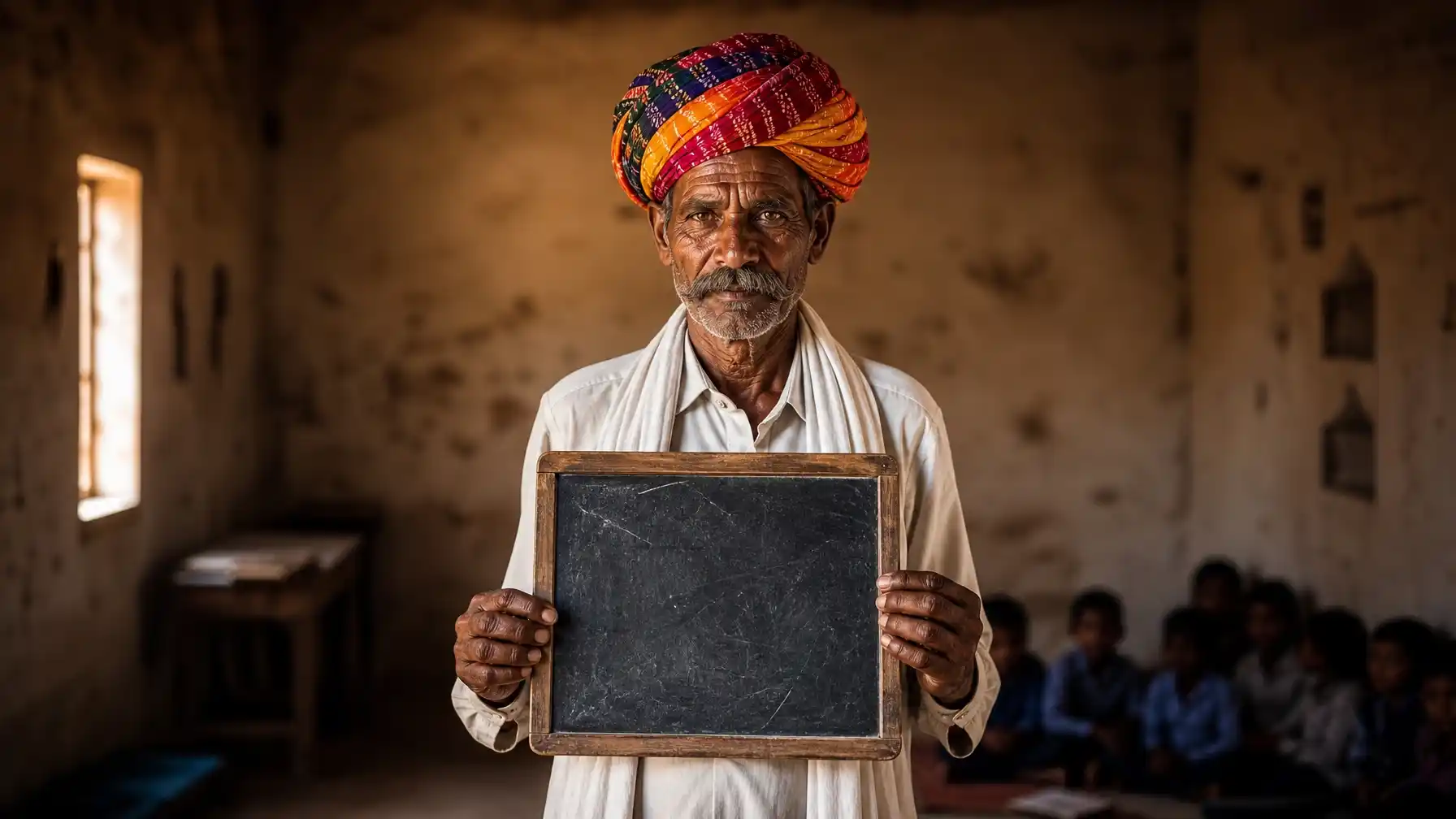
The Supreme Court directed the Rajasthan government to frame a comprehensive Mother Tongue Education Policy, citing Articles 350A, 21A, and 19(1)(a), aligning the state's primary education framework with the National Education Policy 2020.
One Liners
| Fact / Entity | Detail |
|---|---|
| What | Supreme Court directed Rajasthan to frame a Mother Tongue Education Policy |
| When | May 2026 |
| Who | Supreme Court of India; Government of Rajasthan |
| Constitutional Articles | Article 350A (Mother tongue instruction); Article 21A (RTE); Article 19(1)(a) (Freedom of speech and expression) |
| Policy Link | National Education Policy (NEP) 2020 |
| Target Group | Children belonging to linguistic minority groups at the primary stage |
| Key Outcome | Judicial enforcement of constitutional directive for mother tongue facilities |
Why in News?
The Supreme Court's directive to Rajasthan to formulate a Mother Tongue Education Policy marks a significant judicial push to operationalise Article 350A. By invoking Articles 21A and 19(1)(a) alongside NEP 2020, the Court transforms a constitutional directive into an actionable state mandate, potentially setting a precedent for linguistic minority rights enforcement across Indian states.
Keyword/Terminology Hub
- Article 350A: Constitutional directive mandating states and local authorities to provide adequate facilities for instruction in the mother tongue at the primary stage for children from linguistic minority groups.
- Linguistic Minority: Communities within a state whose mother tongue differs from the official language of that state, entitled to protections under Articles 29, 30, and 350A.
- National Education Policy 2020: Comprehensive education reform framework recommending mother tongue as the medium of instruction at least till Grade 5, and preferably till Grade 8.
- Article 21A: Fundamental right to free and compulsory education for children aged 6–14 years, interpreted to include quality education responsive to children's linguistic backgrounds.
Background & Static Concept Link
- Definition: Mother Tongue Education Policy refers to state-level administrative frameworks ensuring that children from linguistic minority communities receive primary instruction in their native language, as constitutionally envisaged under Article 350A.
- Historical Origin: The Constituent Assembly explicitly recognized India's linguistic diversity as a federal imperative. The States Reorganisation Act, 1956, reorganised states largely on linguistic lines, yet simultaneously entrenched minority language protections to prevent marginalisation within new state boundaries.
- Constitutional/Legal Framework:
- Article 350A: Mandates every state and every local authority to provide adequate facilities for instruction in the mother tongue at the primary stage for children belonging to linguistic minority groups.
- Article 29: Protects the right of any section of citizens having a distinct language, script, or culture to conserve the same.
- Article 30: Confers upon minorities the right to establish and administer educational institutions of their choice.
- Article 21A: Guarantees the right to free and compulsory education, judicially interpreted to include meaningful access to education in a child's familiar linguistic medium.
- Article 19(1)(a): Freedom of speech and expression, extended by the Supreme Court to include the right to linguistic expression and identity.
- NEP 2020: Recommends mother tongue as the medium of instruction at least till Grade 5, with the three-language formula operationalised flexibly to respect regional contexts.
- Institutional Framework:
- National Commission for Protection of Child Rights (NCPCR): Monitors implementation of the RTE Act and child rights in education.
- Special Officer for Linguistic Minorities (Article 350B): Investigates all matters relating to the safeguards for linguistic minorities and reports to the President.
- State School Education Departments: Responsible for curriculum delivery and teacher deployment in government schools.
- NCERT and SCERTs: Develop curricular and pedagogical frameworks supporting multilingual education.
- Chronology/Timeline:
| Year | Event |
|---|---|
| 1950 | Constitution of India adopted; Articles 350A and 350B inserted to protect linguistic minority educational rights |
| 1956 | States Reorganisation Act restructures states on linguistic basis while preserving minority protections |
| 1964–66 | Kothari Commission recommends mother tongue as the best medium of early education |
| 2009 | Right of Children to Free and Compulsory Education (RTE) Act enacted under Article 21A |
| 2005 | National Curriculum Framework (NCF) emphasises multilingual classroom strategies |
| 2020 | NEP 2020 launched with foundational emphasis on mother tongue and multilingualism |
| 2022 | NCF for Foundational Stage released, operationalising mother tongue-based pedagogy |
| May 2026 | Supreme Court directs Rajasthan to frame Mother Tongue Education Policy |
- Related Static Topics / Cross References:
- Similar concepts: Three-Language Formula (1968); National Curriculum Framework for School Education (NCFSE)
- Linked schemes: Samagra Shiksha Abhiyan; Padhna Likhna Abhiyan
- Associated reports: Kothari Commission Report (1964–66); NCF 2005 Position Paper on Language
- Comparative examples: Canada's Official Languages Act; European Charter for Regional or Minority Languages
Key Provisions / Main Developments
| Constitutional Mechanism | Operational Mandate | NEP 2020 Alignment |
|---|---|---|
| Article 350A Trigger | States must "endeavor" to provide mother tongue instruction facilities at primary stage | NEP recommends mother tongue as medium till Grade 5 (preferably Grade 8) |
| Article 21A Integration | Right to education interpreted to include linguistically accessible education | Foundational literacy and numeracy best achieved in familiar language |
| Article 19(1)(a) Shield | Linguistic expression protected as part of free speech, reinforcing cultural identity | Multilingualism promoted as cognitive asset and cultural rootedness |
| State Policy Framework | Rajasthan directed to create comprehensive policy covering curriculum, teacher training, and material development | NEP's flexible three-language formula to be adapted to Rajasthan's linguistic diversity |
Mains Perspective (SPECTEL Analysis)
- Social impact: Mother tongue instruction at the foundational stage significantly improves cognitive development, comprehension, and school retention rates. For children from linguistic minority communities, early education in an unfamiliar official language often creates learning deficits and dropout pressures. A state-level policy operationalising Article 350A directly addresses educational equity.
- Political/Legal impact: The directive reinforces cooperative federalism by holding states accountable for constitutional directives that have historically remained dormant. It strengthens the judiciary's role in enforcing positive obligations under the Directive Principles of State Policy when they intersect with fundamental rights (Article 21A).
- Constitutional/Cultural impact: India recognises 22 scheduled languages and hundreds of mother tongues. A judicial mandate for mother tongue education preserves this linguistic diversity, preventing cultural homogenisation and identity erosion. It aligns with NEP 2020's vision of rooting education in India's "rich, diverse, ancient and modern culture and knowledge systems."
- Logical/Ethical conclusion: The Supreme Court's intervention signals a shift from passive constitutional aspiration to active state obligation. If replicated across states with significant linguistic minorities, this could establish a nationwide baseline for linguistically inclusive primary education, transforming Article 350A from a directive principle into a justiciable standard of educational quality.
Fact-Check & Committees
- Relevant Data/Stats: According to Census 2011, India has 121 languages and 270 mother tongues with more than 10,000 speakers each. The NEP 2020 notes that over 85% of a child's brain development occurs by age 6, underscoring the criticality of foundational stage instruction in a familiar linguistic medium. As per NCERT research, children taught initially in their mother tongue demonstrate superior conceptual understanding when transitioned to second languages.
- Committee/Judgment: Kothari Commission (1964–66): Emphasised that "the mother tongue is the best medium of education" and recommended its use at least till the primary stage. National Curriculum Framework (NCF) 2005: Position Paper on Language argued forcefully for multilingual education as a resource rather than a problem. NCF for Foundational Stage (2022): Operationalised play-based, multilingual pedagogies for children aged 3–8.
- Quote: "The mother tongue is the natural medium of instruction for the child, and its use is the surest way to make education meaningful and effective" — Education Commission (Kothari Commission), 1964–66.
Exam Lens
- UPSC/State PCS Mains angle: "Article 350A mandates states to provide facilities for instruction in the mother tongue at the primary stage for linguistic minorities. Examine the reasons for the persistent gap between this constitutional directive and ground-level implementation, and assess the potential of the Supreme Court's intervention in Rajasthan to trigger nationwide compliance."
- Essay angle: "Language as identity and pedagogy: Reconciling linguistic diversity with national integration in India's education system."